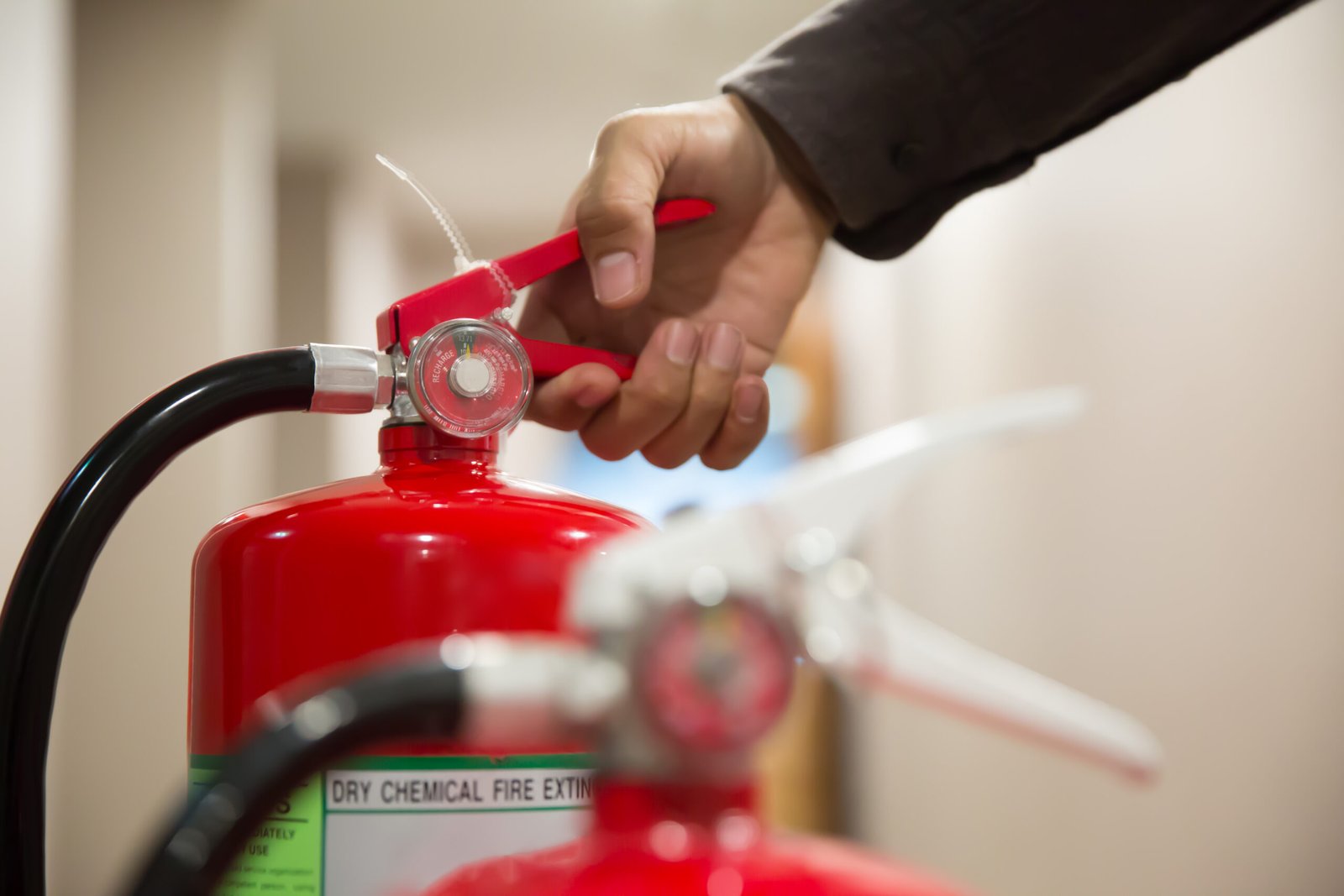
An extinguisher is the first line of defence in the first minutes of a fire, but the wrong type can make things worse. Choosing starts with the class of fire you are likely to face.
Fire classes
- Class A: ordinary solids such as wood, paper, fabric and plastics.
- Class B: flammable liquids such as petrol, diesel and paints.
- Class C: flammable gases (in the US system, electrical fires).
- Class D: combustible metals, which need special agents.
- Class K/F: cooking oils and fats in commercial kitchens.
Extinguisher types
| Type | Suitable for | Typical location |
|---|---|---|
| Dry powder (ABC) | A, B, C and electrical | Shops, warehouses, vehicles |
| CO₂ | Electrical and liquids | Electrical and server rooms, offices |
| Foam | A and B | Warehouses, fuel stations |
| Wet chemical | K/F cooking oil | Restaurant kitchens |
Using an extinguisher: PASS
- Pull the pin.
- Aim at the base of the fire.
- Squeeze the handle.
- Sweep side to side.
Inspection and refilling
Check monthly that the gauge is in the green and the pin is in place; have a licensed company service it annually with a dated tag; refill after any use; and carry out hydrostatic testing at the intervals NFPA 10 sets for each type. We supply every type of extinguisher and cabinet and offer refilling with expiry tags.