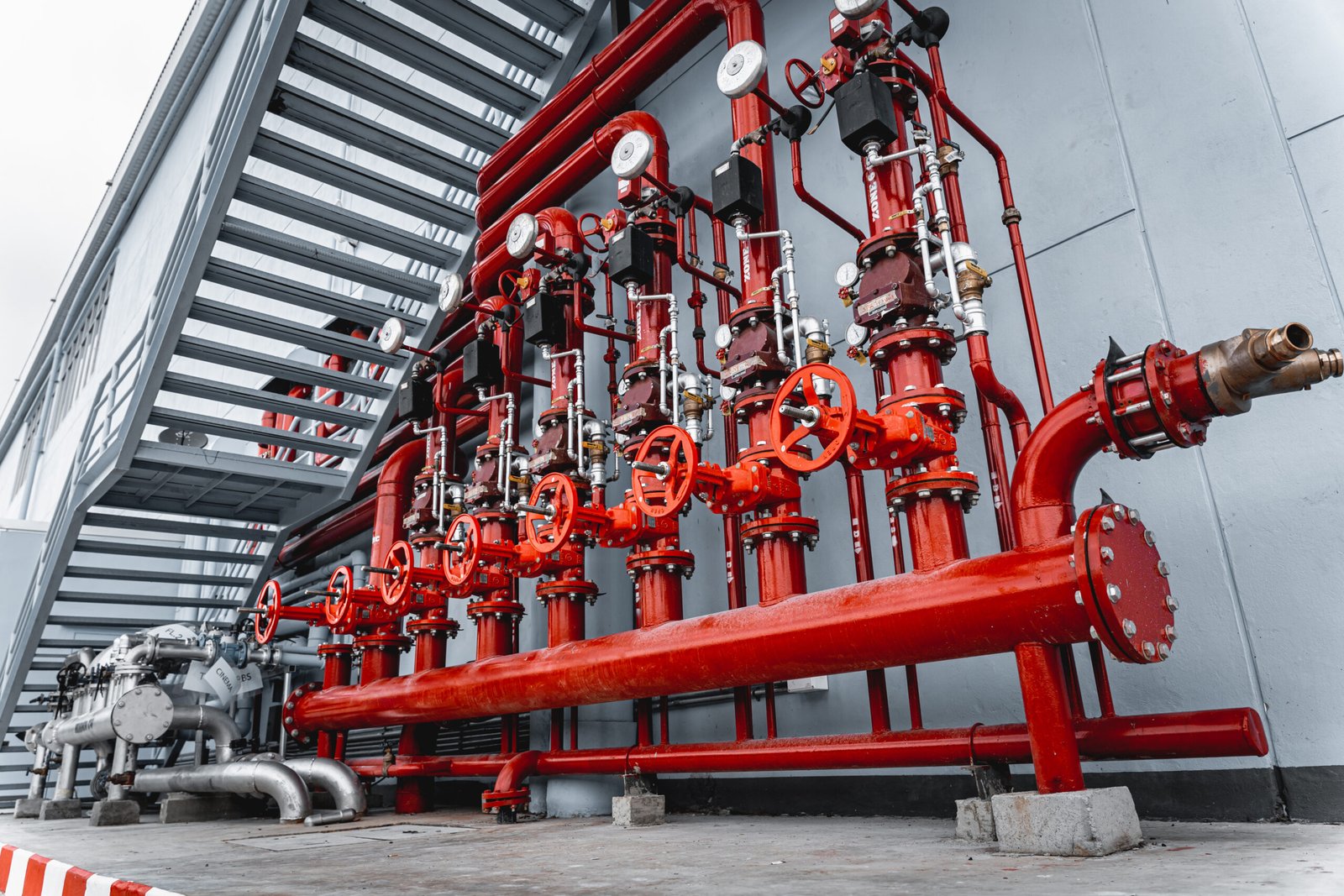
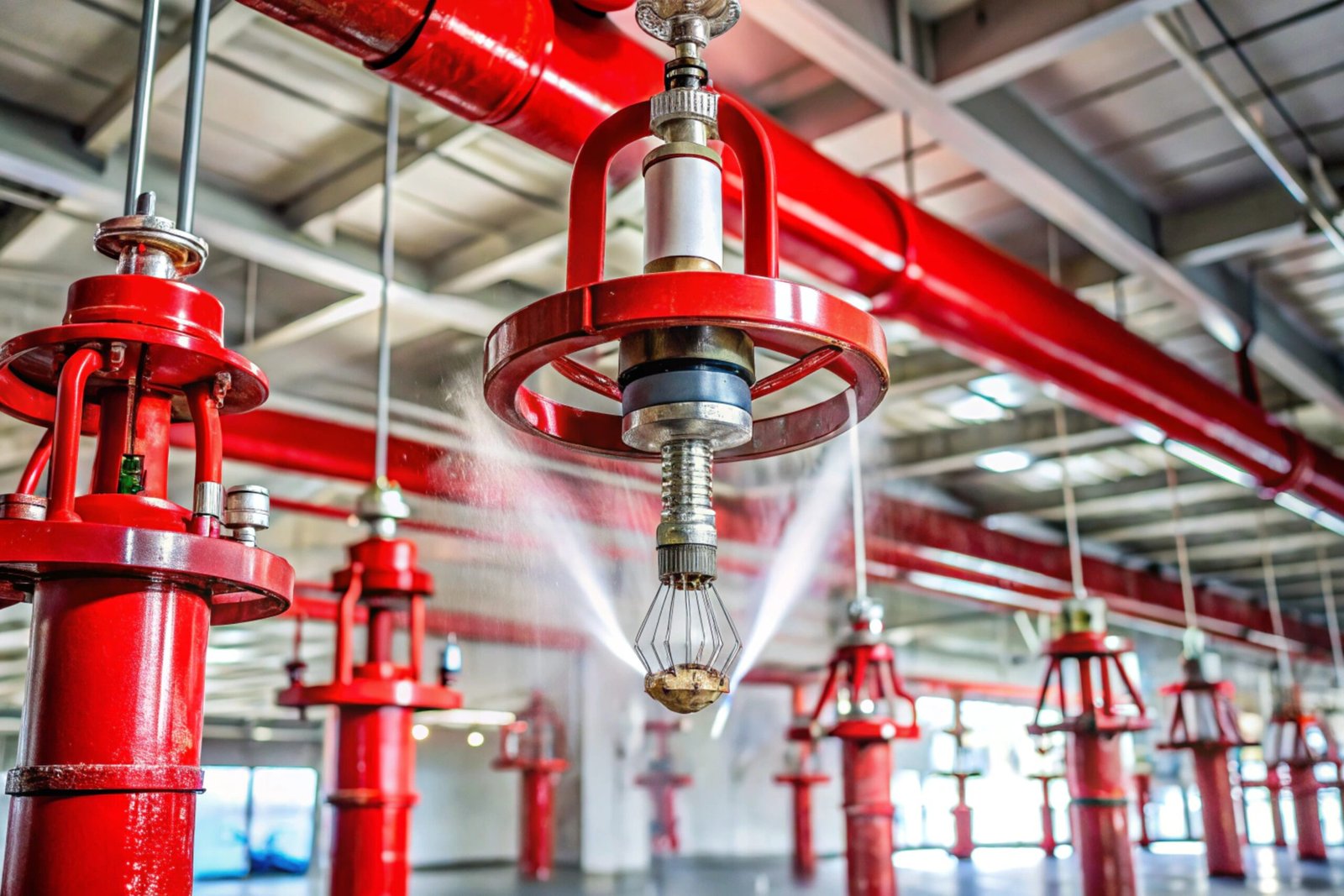
Sprinklers are among the most effective fire protection systems because they act automatically at the fire itself. That only holds if the system is ready at all times, which is why periodic maintenance matters.
How a sprinkler head works
Each head has a glass bulb filled with liquid that expands with heat. At the rated temperature (for example 68°C for a red bulb) the bulb breaks and water flows from that head only, not from every head.
Simplified inspection schedule
| Frequency | What is checked |
|---|---|
| Weekly / monthly | Control valves open and secured; gauge readings. |
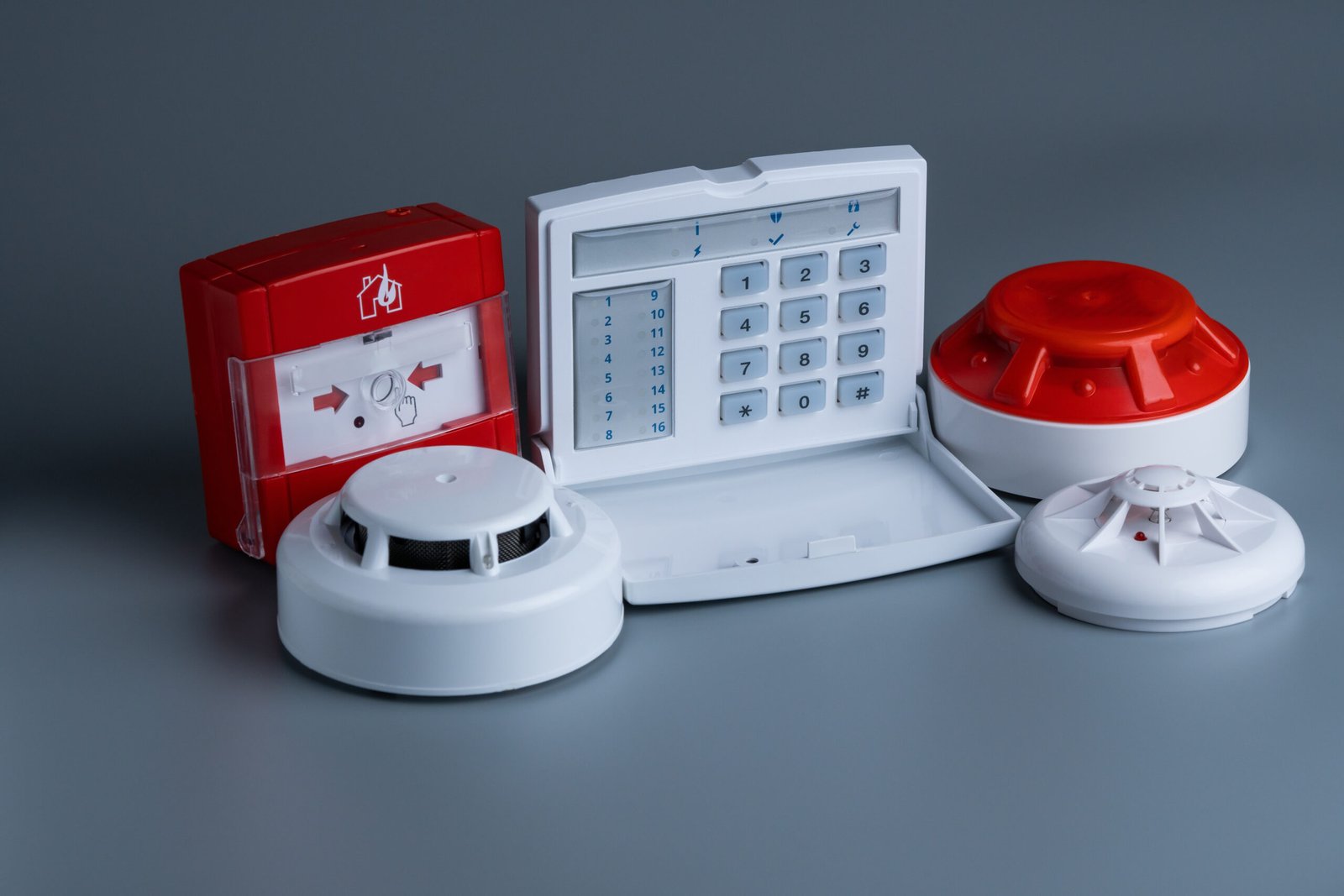
| Quarterly | Alarm devices, flow switch and main drain test. |
| Annually | Visual check of heads, hangers and pipes; spare heads stock. |
| Every five years | Internal pipe inspection for obstruction. |
A general summary of NFPA 25; exact intervals depend on the system type and the facility.
Common faults
- Painted or dusty heads, which must be replaced.
- Storage stacked too close under the heads.
- Valves left closed after works.
- Leaks and corrosion.
- Low pressure caused by fire or jockey pump faults.
We offer full maintenance contracts for firefighting and sprinkler networks across the Eastern Province, with a technical report after every visit.