
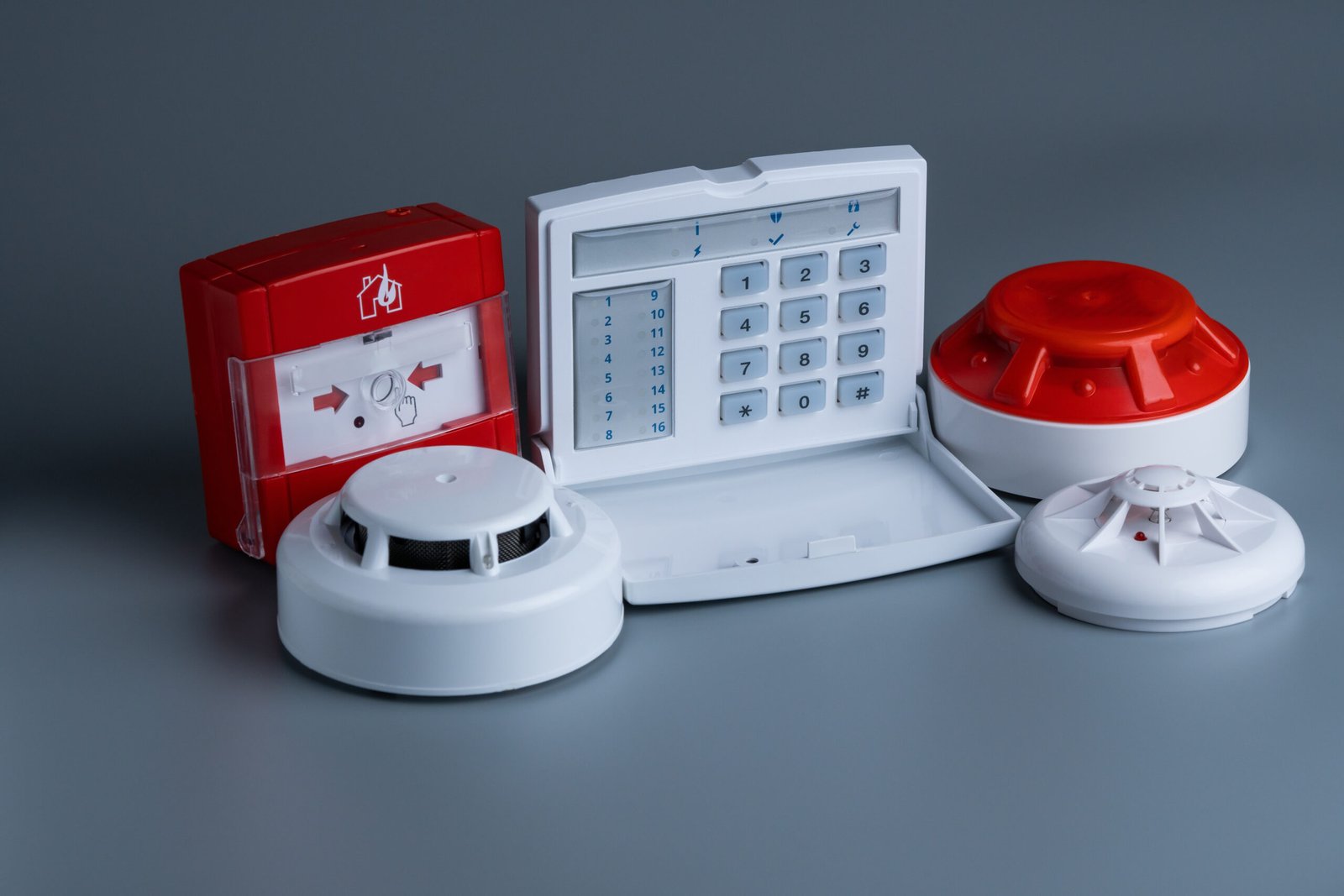
The first question in any fire alarm design is whether to use a conventional or an addressable system. The answer depends on the size of the building, how it is used and the budget.
How a conventional system works
The building is divided into zones, each wired as its own circuit. When a detector activates, the panel shows the zone only, for example “first floor”, not the exact room.
How an addressable system works
Every device has its own address and all devices share a single loop. The panel shows exactly which device triggered, such as “smoke detector, archive room, third floor”, and it monitors each device for faults and contamination.
Quick comparison
| Criterion | Conventional | Addressable |
|---|---|---|
| Fire location | Zone level | Device and room level |
| Initial cost | Lower | Higher |
| Wiring | One circuit per zone | One loop for many devices |
| Fault monitoring | Limited | Per device |
| Future expansion | Harder | Easier |
| Best for | Small shops and offices | Hospitals, towers, malls, factories |
Our advice
Compare lifetime cost, not just purchase price. In large buildings, addressable systems are often cheaper over the years thanks to simpler wiring and faster fault finding. We supply and install both and will recommend the right one after a site visit.